


Hardwood floors are built to last for decades — and in many New Jersey homes, original wood floors have survived for generations. But even the best hardwood finish eventually wears down. Daily foot traffic, pet nails, moving furniture, UV exposure, moisture, and years of cleaning gradually affect the protective coating that keeps wood looking beautiful and protected.
The good news is that a worn hardwood floor does not automatically need to be replaced. In many cases, professional hardwood floor refinishing can restore the floor’s natural color, remove surface damage, and add a durable new protective finish for a fraction of the cost of new flooring.
Below are the most common signs your hardwood floor needs refinishing, how to tell whether damage is cosmetic or structural, and when to contact a professional flooring contractor in New Jersey or New York.
1. Your Hardwood Floor Looks Dull, Faded, or Lifeless
A dull appearance is one of the earliest and most common signs that hardwood floors need refinishing. Over time, the finish layer that gives wood floors their sheen and protection becomes worn down by foot traffic, cleaning, sunlight, and normal household activity.
If your hardwood used to have a rich, even appearance but now looks flat, cloudy, gray, or unevenly faded, the protective finish may be reaching the end of its life. This is especially common in high-traffic areas such as entryways, hallways, living rooms, kitchens, and dining rooms.
Professional refinishing removes the worn surface layer, exposes fresh wood beneath, and applies a new finish system designed to protect the floor from future traffic and moisture exposure.
2. Scratches Have Reached the Bare Wood
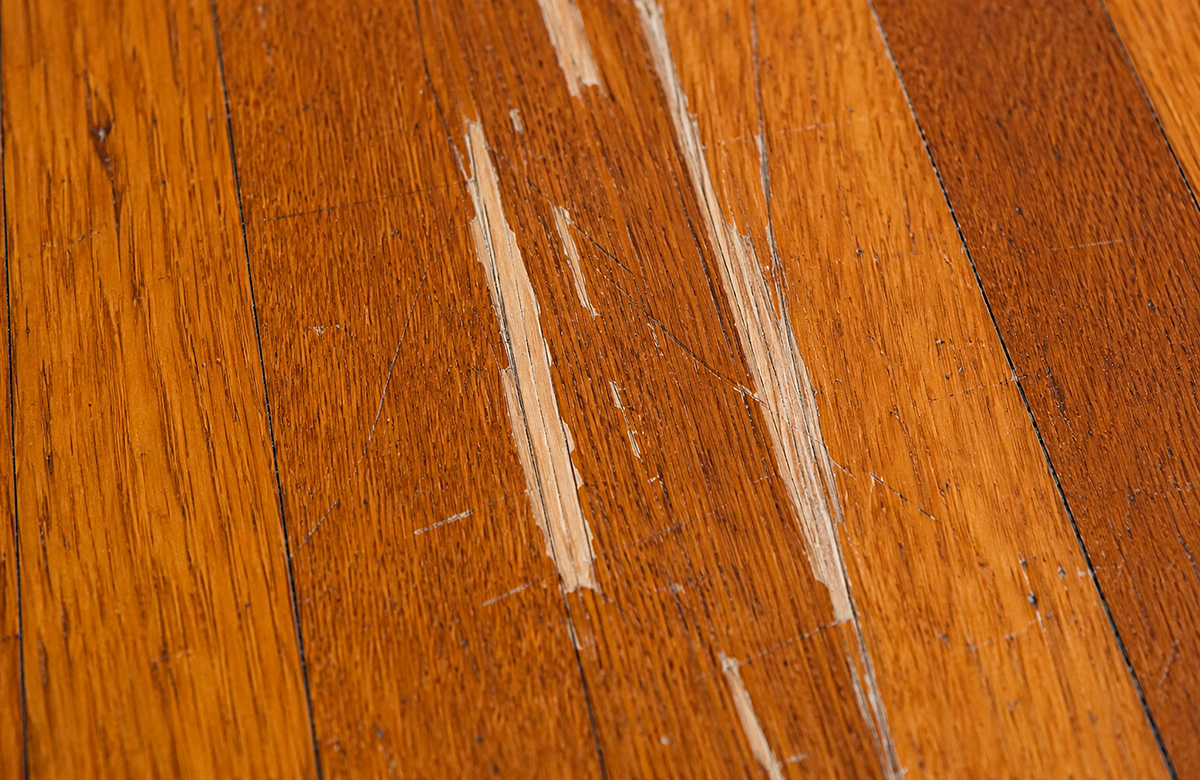
Surface scratches are normal on hardwood floors, especially in homes with pets, children, active households, or furniture that is frequently moved. Minor scratches that affect only the finish layer can often be addressed with maintenance products or a professional screen-and-recoat service.
However, deeper scratches that expose raw wood are a more serious concern. Once the finish is damaged enough for bare wood to become visible, moisture, dirt, and stains can penetrate the surface. Over time, this can lead to dark marks, discoloration, swelling, and more extensive repairs.
If you can see light-colored wood beneath the finish, dark lines in traffic paths, or scratches that feel rough when you run your hand across them, it is a strong sign your hardwood floor should be evaluated for refinishing.
3. Water Stains, Black Marks, or Gray Discoloration Are Appearing
Water damage is one of the clearest indicators that hardwood flooring needs professional attention. When water sits on a floor after a spill, leak, pet accident, wet shoes, or appliance issue, it can penetrate through worn finish and react with the wood beneath.
Common water-damage warning signs include:
- Black or dark brown stains around seams or board edges
- Gray patches where the finish has worn through
- White or cloudy marks caused by trapped moisture
- Dark rings beneath plant pots, rugs, or pet bowls
- Discoloration near exterior doors, kitchens, laundry rooms, or bathrooms
Not all water stains require replacement. Depending on how deep the discoloration has penetrated, sanding and refinishing may significantly improve or fully remove the affected area. A professional assessment is the best way to determine whether the wood can be restored.
4. Your Floorboards Are Showing Gaps, Cupping, or Warping
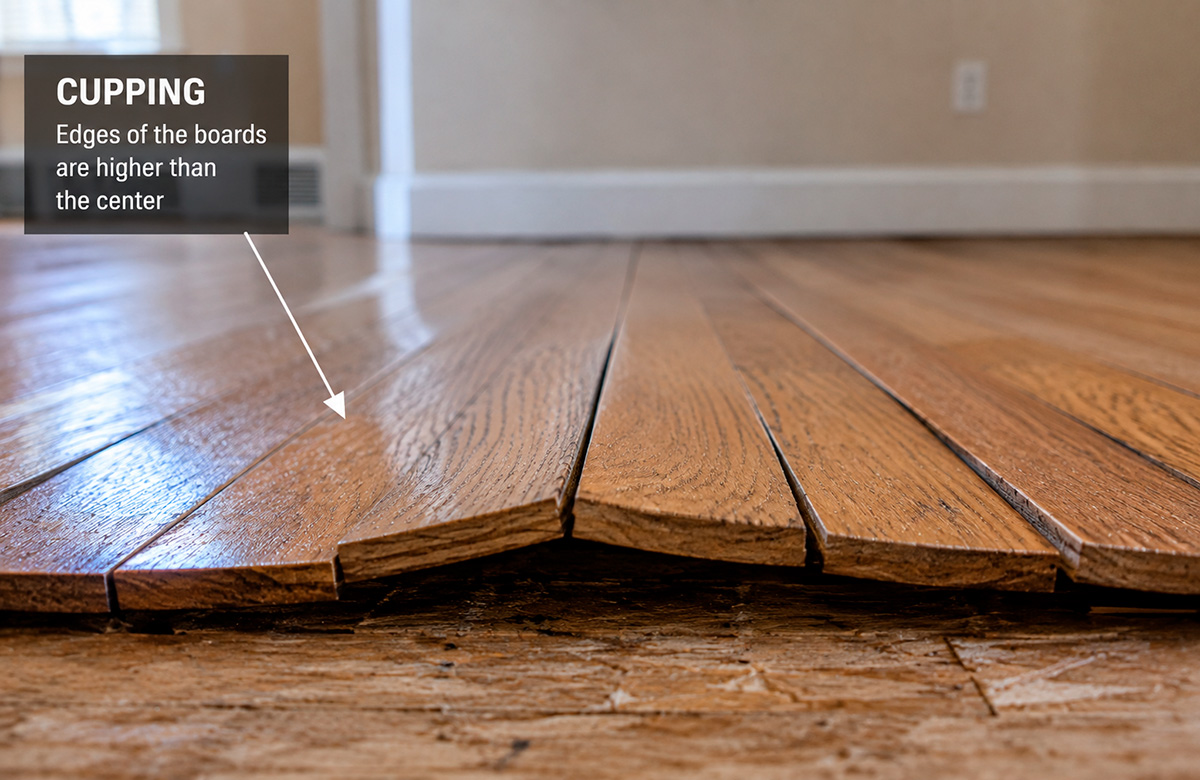
New Jersey homes experience major seasonal changes in humidity. During humid summers, hardwood absorbs moisture and expands. During dry winters, especially in homes with forced-air heat, hardwood releases moisture and contracts. Some seasonal movement is normal, but excessive gaps, cupping, crowning, or warped boards can indicate a moisture problem that needs attention.
Gapping happens when boards pull apart, usually during dry winter months. Small seasonal gaps may close during summer, but large or persistent gaps should be evaluated.
Cupping occurs when the edges of the boards rise higher than the center, creating a concave shape. It is often caused by excess moisture below the floor or high indoor humidity.
Crowning is the opposite condition: the center of the board rises higher than the edges. It can happen when a cupped floor is sanded before the moisture issue has been fully resolved.
Refinishing should never begin until the cause of moisture movement has been identified and corrected. Once moisture levels are stable, sanding, board repair, and refinishing may restore the floor’s appearance and performance.
5. High-Traffic Areas Look Different From the Rest of the Floor
Walk through your home and compare the appearance of high-traffic sections with areas beneath furniture, along walls, or inside closets. If the center of a room looks faded, scratched, or gray while protected areas still look rich and glossy, the finish has likely worn away in the active traffic path.
This pattern is particularly common in:
- Front entryways and mudrooms
- Hallways between bedrooms and bathrooms
- Living room walkways
- Kitchen work zones
- Dining room areas around tables and chairs
- Pet routes between doors, beds, and food bowls
When traffic paths begin to show bare wood, discoloration, or deep finish wear, refinishing protects the floor before cosmetic damage becomes structural damage.
6. The Finish Is Peeling, Flaking, or Cracking
A healthy hardwood finish should be smooth, consistent, and firmly bonded to the wood. If the finish begins peeling, flaking, cracking, or separating from the surface, the floor is no longer protected effectively.
Finish failure can be caused by age, improper cleaning products, excessive moisture, poor previous refinishing work, incompatible wax or polish buildup, or normal wear after many years of use. Once finish failure is visible, simply applying more finish on top is rarely the correct solution. The damaged layers usually need to be professionally sanded away before a new finish system can bond properly.
7. Your Hardwood Floors Have Not Been Refinished in 10 to 15 Years
There is no single timeline that applies to every hardwood floor. A lightly used bedroom floor may look excellent for 20 years or more, while a busy kitchen or entryway may need attention much sooner. Still, many NJ homeowners find that high-traffic hardwood floors benefit from professional evaluation after approximately 10 to 15 years.
The actual timing depends on several factors:
- Type and quality of the existing finish
- Amount of foot traffic
- Presence of pets and children
- Indoor humidity control
- Cleaning products and maintenance habits
- Exposure to direct sunlight
- Previous refinishing history
If you are unsure how old your finish is or whether the floor has been refinished before, Floor Supreme can inspect the condition of your floor and recommend the most practical next step.
8. Your Hardwood Floor No Longer Repels Water
A simple water-drop test can help reveal whether the protective finish on your hardwood floor is still functioning properly. Place a few drops of water on an inconspicuous section of the floor and observe what happens.
- If the water beads on the surface for several minutes, the finish is likely still protecting the wood.
- If the water slowly absorbs and darkens the wood, the finish is becoming worn.
- If the water absorbs quickly, leaves a dark mark, or spreads into the grain, refinishing should be considered soon.
Do not perform this test repeatedly or in a highly visible area. It is only a basic indicator, not a complete diagnosis. A flooring professional can evaluate finish thickness, wood condition, stain penetration, and prior refinishing history more accurately.
Can Your Hardwood Floor Be Refinished — or Does It Need Replacement?
Most solid hardwood floors can be sanded and refinished several times during their lifespan. A standard 3/4-inch solid hardwood floor may support 5 to 7 refinishing cycles, depending on the condition of the boards and the amount of wood removed during previous sanding.
Engineered hardwood may also be refinished, but this depends on the thickness of the real wood veneer. Products with a wear layer of 3mm or more can often be refinished once or twice. Thin engineered floors with a veneer under 2mm may not be suitable for full sanding and may require replacement when the finish is heavily worn.
Replacement may be necessary when there is extensive structural damage, severe water damage, widespread termite damage, boards that are too thin from prior sanding, or a subfloor issue that cannot be corrected through repair. However, many floors that look damaged at first glance can still be restored through professional refinishing and targeted board replacement.
For more information about choosing between solid and engineered wood, read our guide: Hardwood vs Engineered Wood Flooring in NJ.
How Professional Hardwood Floor Refinishing Works
Professional hardwood refinishing is a multi-step process designed to restore the floor while protecting the surrounding home. Although each project is different, the process typically includes:
- Floor inspection: Evaluating board thickness, finish condition, scratches, stains, moisture concerns, and subfloor stability.
- Preparation: Protecting adjacent areas, addressing loose boards, repairing minor damage, and preparing the work zone.
- Dust-controlled sanding: Removing the old finish, scratches, surface stains, and worn wood layer.
- Detail sanding: Refinishing edges, corners, and areas that larger sanding equipment cannot reach.
- Staining, if requested: Applying a custom color or restoring the floor’s natural wood appearance.
- Protective finish application: Applying multiple finish coats for durability, sheen, and long-term protection.
- Final inspection: Reviewing the completed floor and providing care guidance for the curing period.
Most residential hardwood refinishing projects take approximately 3 to 5 days, depending on square footage, floor condition, stain selection, repairs, and drying time between finish coats.
How to Make Your Refinished Hardwood Floors Last Longer
After refinishing, regular maintenance helps protect your investment and delay the need for another sanding cycle. The most important hardwood care practices include:
- Sweep or use a microfiber dust mop regularly in high-traffic areas.
- Use a hardwood-safe vacuum attachment without a rotating beater bar.
- Clean with a pH-neutral hardwood floor cleaner.
- Never use steam mops, harsh abrasives, ammonia, wax buildup products, or excessive water.
- Use felt pads beneath furniture legs.
- Place mats near exterior doors to collect grit, sand, salt, and moisture.
- Keep pet nails trimmed.
- Maintain indoor relative humidity between 35% and 55% whenever possible.
Read our full guide for more expert care advice: Hardwood Flooring Maintenance Tips to Make It Last Decades.
Hardwood Floor Refinishing in New Jersey and New York
Floor Supreme provides professional hardwood floor refinishing, sanding, staining, repair, and installation for homeowners and businesses throughout New Jersey and New York. We are based in Freehold, NJ and serve clients across Monmouth County, Ocean County, Middlesex County, Manhattan, Brooklyn, and Staten Island.
Our service areas include Howell, Manalapan, Marlboro, Red Bank, Tinton Falls, Toms River, Edison, Manhattan, Brooklyn, and Staten Island.
Frequently Asked Questions About Hardwood Floor Refinishing
How do I know if my hardwood floor needs refinishing?
Your hardwood floor may need refinishing if it looks dull or faded, has deep scratches that expose bare wood, shows water stains or dark marks, has worn traffic paths, or no longer repels water. A professional flooring inspection can confirm whether refinishing or repair is the best option.
Can badly scratched hardwood floors be refinished?
Yes. Most scratched solid hardwood floors can be professionally sanded and refinished. Sanding removes surface scratches, worn finish, and minor stains before a new protective finish is applied. Deep gouges or damaged boards may require targeted repair or replacement before refinishing.
How often should hardwood floors be refinished?
Most hardwood floors need refinishing approximately every 10 to 15 years in high-traffic homes, although the exact timeline depends on finish quality, maintenance, pets, foot traffic, sunlight exposure, and humidity conditions. Low-traffic floors may last much longer between refinishing cycles.
How long does hardwood floor refinishing take?
Most residential hardwood floor refinishing projects take around 3 to 5 days. The timeline depends on the size of the project, floor condition, repair needs, stain color, finish type, and drying time between coats.
Is it cheaper to refinish or replace hardwood floors?
In most cases, refinishing hardwood floors is much less expensive than replacing them. Professional refinishing typically costs significantly less than removing existing flooring, preparing the subfloor, purchasing new hardwood, and installing new material. Replacement is usually recommended only when the floor has severe structural damage, excessive moisture damage, or insufficient wood thickness for another sanding.
Can engineered hardwood floors be refinished?
Some engineered hardwood floors can be refinished, depending on the thickness of the real wood veneer. Engineered flooring with a wear layer of 3mm or greater can often be refinished once or twice. Thin veneers may not tolerate sanding and may require replacement instead.

2 Comments
🤑 Withdraw 39,437.74 USD NEXT ->> telegra.ph/Coinbase-Card-08-06?hs=ee2ce7978b1aa053bc24459aeaa84ef5& 🤑
738cc1
💾 (1) MESSAGE #102275 READ => linkspree.net/p/you-have-1-new-message-5c6858?hs=ee2ce7978b1aa053bc24459aeaa84ef5& 💾
odoig4